
Rocket League
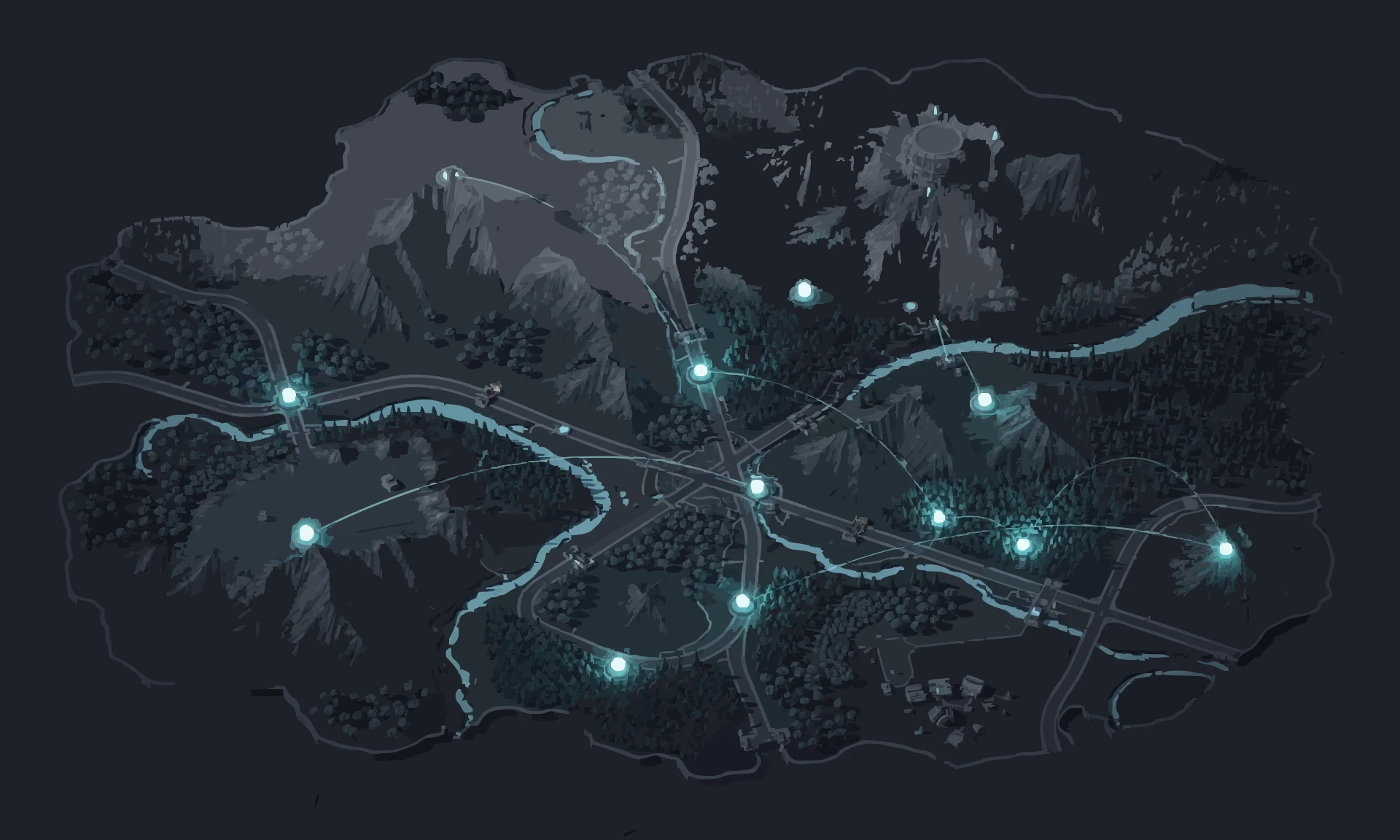
Got a phone and WiFi? That's two connections. PingAim lets you pick which one Rocket League uses — at 120Hz physics, even small jitter shifts where you see the ball during aerials and kickoffs. Server map, ping test, and network guide included.
Does PingAim Help in Rocket League?
More about Easy Anti-Cheathow it works · what it blocks · known conflicts
Easy Anti-Cheat (EAC) added in Season 22 (April 2026). EAC must be enabled for online play (matchmaking, private matches, tournaments). Players can launch without EAC for offline/training/LAN/replays. EAC supports Linux/Proton/Steam Deck. Prior to Season 22, Rocket League relied on server-side detection and manual bans only.
VPN and network optimizers
Network optimizers (ExitLag, WTFast, Hone, LagoFast) are widely used with Rocket League without bans. VPNs are commonly used for region selection. Psyonix/Epic has not banned network optimization tools. EAC does not target network-level tools that don't modify the game process.
Known software conflicts
- BakkesMod and other mods do not work when EAC is enabled (must launch without EAC for mods)
- Discord overlay has been reported to cause performance issues in some configurations
- Anti-cheatEAC
- ProtocolUDP
- Tick rate120 HZ
- ConnectionDedicated
- Hostingi3D.net (primary) + cloud-burs…
- EngineUnreal Engine 3 (heavily modified)
- NATOpen
- LauncherEpic Games Launcher (primary) or Steam (legacy installs)
- Install size12 GB
Why ping matters in Rocket League
Latency sensitivity CriticalPing decides duels — sub-50ms is competitive territory.
Rocket League runs physics at 120 Hz — one of the highest simulation rates in competitive gaming. Aerial shots require timing car boosts, rotations, and ball contact within 1-2 physics frames (8-16ms windows). At 20ms ping, what you see closely matches reality. At 80ms+, the ball's predicted position diverges from the server's actual position, causing 'phantom touches' where you hit the ball on your screen but the server says you missed. Demolitions (boosting into an opponent at supersonic speed) have a narrow collision window — high ping means demos that should land don't register. Kickoffs are purely timing-based and symmetrical, so even 20ms of ping difference between players creates a measurable advantage. Per Raaen 2014 (cross-genre latency-threshold survey), action-game performance degrades sharply above ~50-100ms RTT; Rocket League's 120 Hz / prediction-rollback architecture makes jitter especially destructive because the client's prediction accuracy depends on a stable round-trip time.
About Rocket Leaguebackground, studio, esports scene
Rocket League is a free-to-play vehicular soccer game developed by Psyonix and published by Psyonix/Epic Games. Originally released in July 2015, the game combines arcade-style car mechanics with competitive team-based soccer, where players use rocket-powered cars to hit a ball into the opposing team's goal. Matches are typically played in 3v3, 2v2, or 1v1 formats with 5-minute regulation time. The game features full cross-platform play between PC, PlayStation, Xbox, and Nintendo Switch.
Rocket League runs on a heavily modified Unreal Engine 3, with its core gameplay built around deterministic physics simulation running at 120 Hz on both clients and servers. The game's netcode uses client-side prediction with server reconciliation — clients predict the ball and car positions ahead in time based on half their ping, then rewind and replay physics when corrections arrive from the server. This architecture makes the game feel responsive even at moderate latency, but high ping or jitter directly impacts aerial accuracy, ball touches, and demolition timing.
Rocket League hosts the Rocket League Championship Series (RLCS), one of the major esports leagues, with the 2026 season featuring a $6.1 million prize pool across multiple majors and a world championship. The game transitioned to free-to-play in September 2020 and experienced a major resurgence in early 2026, surpassing 1 million concurrent players for the first time since 2020. Server infrastructure is provided primarily by i3D.net with cloud-burst scaling across multiple providers.
- Developer
- Psyonix
- Publisher
- Psyonix / Epic Games
- Released
- 2015
- Platforms
- Windows, PlayStation, Xbox, Switch
- Engine
- Unreal Engine 3 (heavily modified)
- Esports
- Tier 1 — global circuit
Explore the Rocket League Guide



PingAim detects Rocket League automatically
No manual config. PingAim identifies Rocket League by process name and routes it through your fastest connection using a kernel-level WFP driver.
When does PingAim help — and when doesn't it?
PingAim helps when...
- You have a phone with 5G/LTE — tether via USB to give Rocket League its own connection
- You have both WiFi and Ethernet — pick which interface Rocket League uses without disabling the other
- You stream while gaming — keep Rocket League on one connection and OBS/upload on another
- Your WiFi is congested with family or roommates — route Rocket League through phone tethering instead
- You have two ISPs or a dual-WAN router and want to dedicate one to gaming
- Windows picks the wrong interface for Rocket League and you want explicit control
- Ball snapping and phantom touches caused by jitter from shared bandwidth
Won't help when...
- You only have one network connection with no way to add a second
- Your only connection is already fast and stable to your i3D.net region
- Game server itself is under heavy load (server-side lag, server health icon)
- FPS drops causing visual stuttering (not network related)
- Heavy Car Bug — likely a mix of desync and client-side issues, not solvable by routing alone
- Easy Anti-Cheat — use PingAim's WFP-driver mode only; the WFP path is the supported configuration with no documented ban history, and DLL-injection mode would be blocked by EAC on the game process anyway
Related Games
Other games sharing technical traits with Rocket League — anti-cheat, hosting, engine, or genre.

Recent Updates
See all Rocket League updates →Community & Official Resources
Where players talk and where the publisher posts updates.
Glossary18 terms used on this page
- DNS
- Domain Name System — converts website names to IP addresses
- EAC
- Easy Anti-Cheat — anti-cheat system by Epic Games, added to Rocket League in Season 22
- Ghost hit
- Same as phantom touch — community term for client-server prediction mismatch on ball contact
- Hz
- Hertz — updates per second. 120 Hz = physics computed 120 times per second
- i3D.net
- Game hosting provider owned by Ubisoft — hosts Rocket League servers globally
- ISP
- Internet Service Provider — the company that provides your internet connection
- ms
- Milliseconds — 1/1000 of a second. Lower = better for gaming
- NAT
- Network Address Translation — how your router maps internal IPs to your public IP. 'Open' NAT is best for gaming
- Phantom touch
- When you hit the ball on your screen but the server says you missed — caused by client prediction error from high ping/jitter
- Prediction
- Client-side technique where the game shows the ball's predicted future position based on half your ping
- QoS
- Quality of Service — router feature that prioritizes game traffic over downloads
- RLCS
- Rocket League Championship Series — Psyonix/Epic's official esports league
- Rollback
- When the server correction arrives and the client rewinds physics to apply it, then fast-forwards back to present
- RTT
- Round Trip Time — how long a packet takes to go to the server and back (your ping)
- TCP
- Transmission Control Protocol — reliable but slower protocol (used for downloads, web)
- UDP
- User Datagram Protocol — fast network protocol used by games (no waiting for lost packets)
- UPnP
- Universal Plug and Play — automatic port forwarding. Enabling UPnP on your router is an alternative to manual port forwarding for Rocket League
- WFP
- Windows Filtering Platform — Windows kernel API for network packet inspection and routing